
The essential thing to remember
- The Mount Maudit (4,465 m) Is a peak technical and dangerous, marked by avalanches and extreme conditions.
- Its name comes from Alpine beliefs linked to the dangers of glaciers and storms; first ascent in 1878.
- The main access goes through the Cosmic Refuge, with a demanding ascent on glacier and exposed edge.
- The crossing of Trois Monts offers a major challenge combining Tacul, Maudit and Mont-Blanc in a single race.
- In exchange, the summit offers exceptional panoramas on the Mont-Blanc massif and its glaciers.
The origins of Mont Maudit
A dangerous summit
Why “Damn”? It has its roots in the popular beliefs of the alpine valleys. For centuries, the snow-capped peaks were perceived by locals as hostile places. Rumbling glaciers, unpredictable avalanches, and sudden storms fuelled a profound fear of these inaccessible peaks.
From a historical point of view, the first official ascent of the summit is attributed to a rope led by guides Henry Anderegg and Johann Jaun, accompanied by the British Thomas Stuart Kennedy (in 1878).
At that time, mountaineering was still in its infancy in the Mont-Blanc massif and climbing such a summit was as much a physical feat as a human adventure. Since then, Mont Maudit has built a solid reputation in the high mountain world: that of a technical, demanding and selective summit, where the slightest error of appreciation can have dramatic consequences.
Numerous avalanches and difficult access conditions
Because it must be said: Mont Maudit is one of the the most dangerous peaks in the Alps. Unstable seracs, corridors exposed to falling rocks, weather conditions changing in a few minutes: the mountain does not forgive anything.
Its history is marked by avalanche-related dramas. The oldest dates back to 1820, when a team led by the British officer Joseph Anderson and Dr. Joseph Hamel was hit by a snowfall. Three guides perish, engulfed in the cracks. It was then the very first fatal accident that occurred during an attempt to climb Mont-Blanc (an episode that was significant enough for Paul Verne to relate in his story Fortieth ascent to Mont-Blanc).
Nearly two centuries later, the mountain keeps knocking: In July 2012, an avalanche claimed the lives of nine mountaineers, then in August 2016, a collapse of Seracs killed three new victims.
How do I get to Mont Maudit?
The classic route via the Mont Maudit pass
Mont Maudit is not easy to approach. No access route can be described as “easy”: all involve a solid mountaineering experience, excellent physical condition and a mastery of progression techniques on glacier and mixed terrain.
The most popular route starts from Cosmic Refuge, perched at an altitude of 3,613 meters, accessible from the Aiguille du Midi. From there, mountaineers cross the Tacul glacier, then go up in the direction of Col Maudit (4,035 m) before attacking the summit ridge. This portion is undoubtedly The most delicate : the ridge, sometimes snowy, sometimes rocky, is narrow, exposed and subject to violent winds. The final slope (steep and icy) requires rigorous clamping and permanent rigging.
Count between 5 and 7 hours of ascent from the refuge depending on the conditions and the level of the rope. The departure is usually At night, between 2 am and 4 am, in order to take advantage of the nocturnal frost that stabilizes the snowpack and limits the risk of avalanches.
Crossing the Trois Monts
The other, more ambitious option is to integrate Mont Maudit into the famous crossing of the Trois Monts du Mont-Blanc. This itinerary links successively the Mont-Blanc du Tacul (4,248 m), the Mont Maudit (4,465 m) and theAscension of Mont-Blanc (4,808 m) in a single race. It is a large-scale, long, committed and physically demanding journey, which constitutes one of the most beautiful altitude races in the Western Alps. You have to count between 10 and 14 hours of sustained effort, with technical passages that leave no room for improvisation.
The other itineraries
Mountaineers looking for a more technical challenge gladly turn to the south-east ridge, known as Voie Küffner or Arête de la Tour Ronde. Renowned as one of the most beautiful courses in the massif, it alternates climbing passages up to the 4th degree and slopes reaching 50°, for an overall D rating.
Finally, the south-east face by the Voie Crétier is aimed at mountaineers who are familiar with mixed terrain. Rock in IV, steep and sustained ice, 700 meters of altitude difference: you have to count about 8 hours from the foot of the wall to overcome it, with a TD- rating.
The indispensable conditions
Regardless of the path chosen, certain conditions are non-negotiable:
- Professional coaching : unless you have proven high mountain experience, using a mountain guide is highly recommended, even essential.
- Prior acclimatization : spending at least two to three days at altitude before attempting the ascent allows the body to adapt to the lack of oxygen and considerably reduces the risk of acute mountain sickness.
- Favorable weather window : in the high mountains, the weather dictates everything. A stable window of 24 to 48 hours is the minimum required to calmly consider the ascent.
- Adapted equipment : ice ax, crampons, harness, harness, rope, rope, helmet, extreme cold clothing...
Breathtaking panoramas
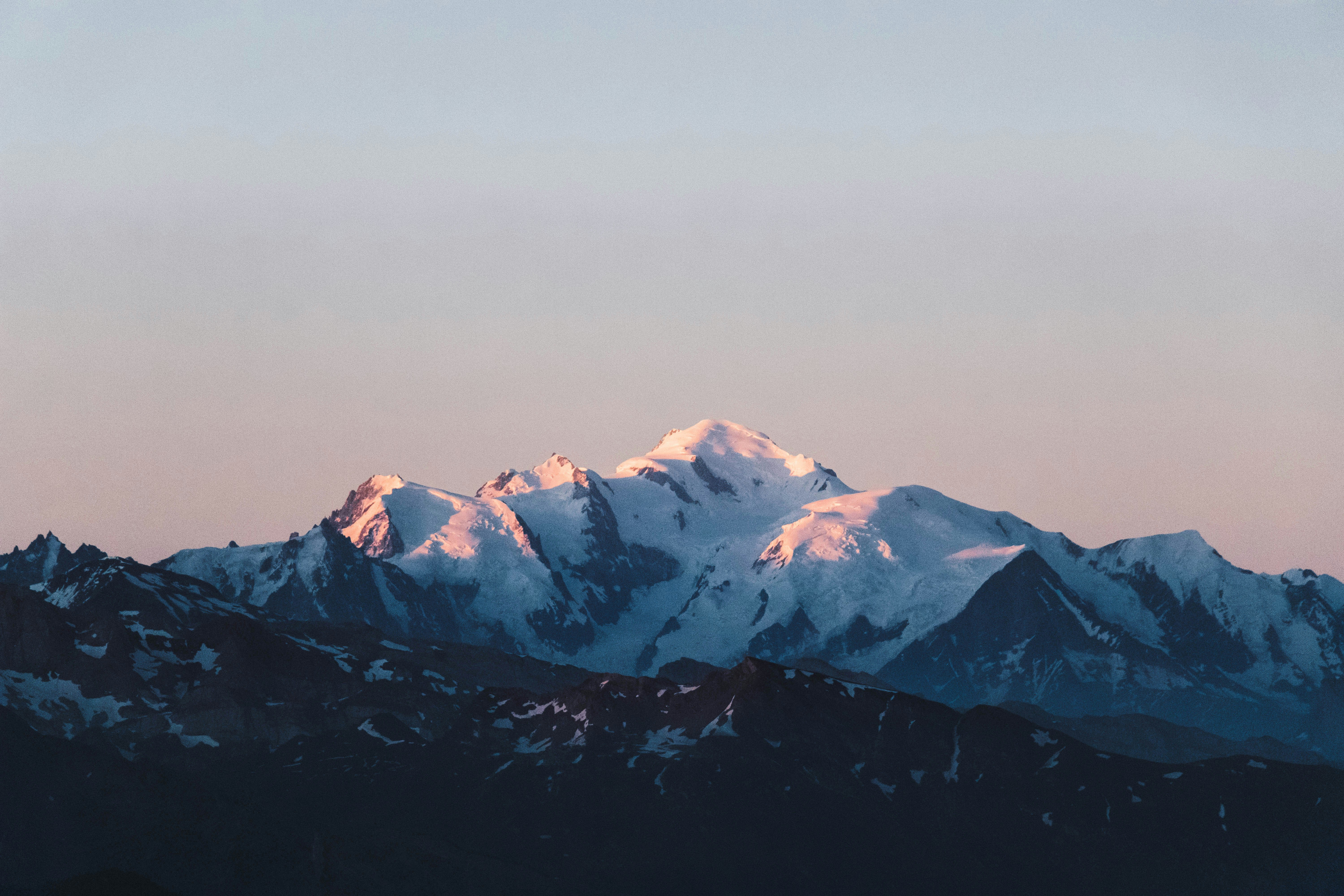
If Mount Maudit requires so much from those who climb it, it is also because it offers panoramic views of striking beauty. From the summit, the view embraces a 360-degree horizon that leaves even the most experienced mountaineers speechless.
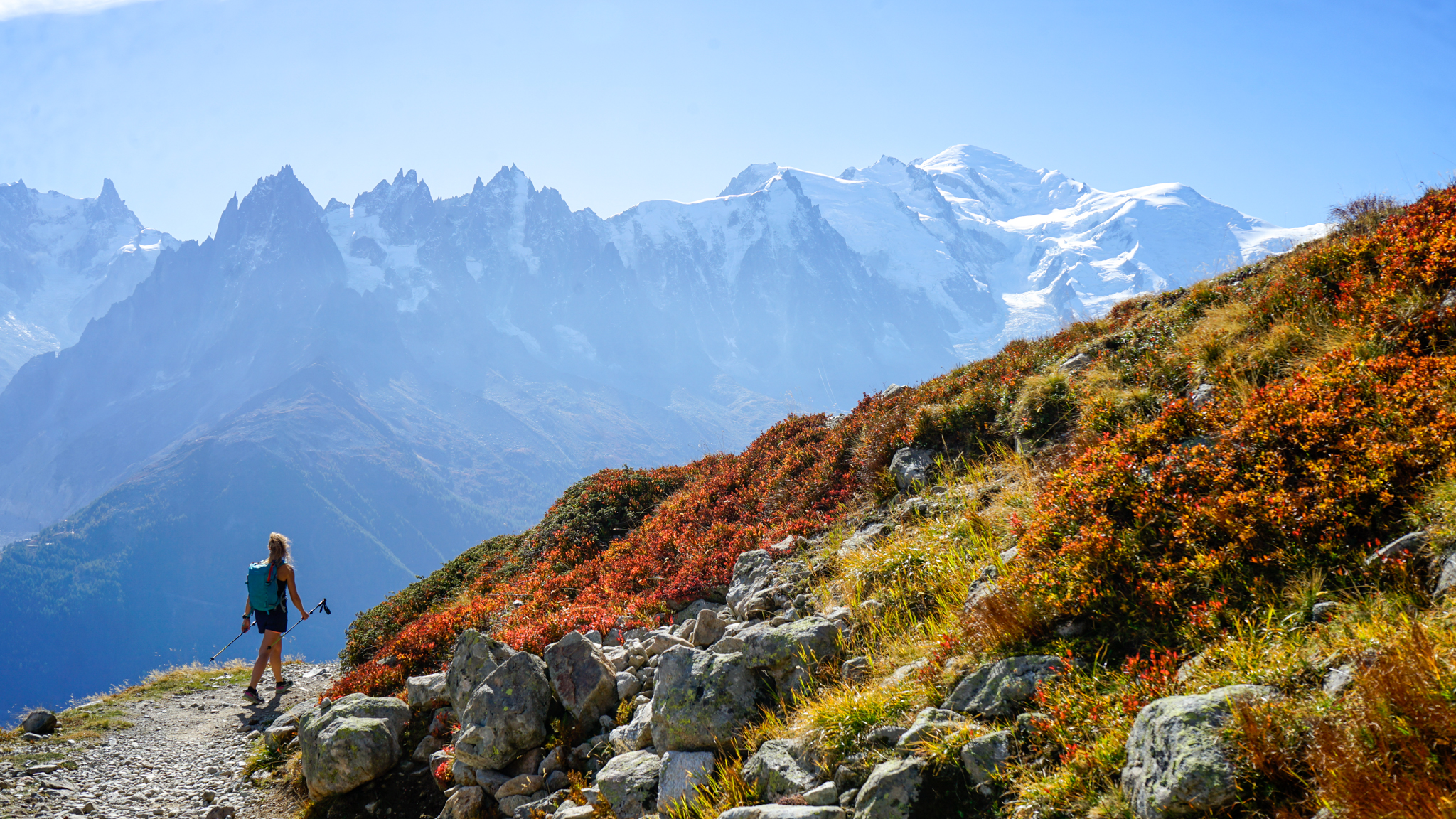
To the north-west, the eye naturally turns to the Rounded dome of Mont-Blanc, majestic and overwhelming in whiteness. To the east, the Mont-Blanc du Tacul reveals its vertiginous north faces, streaked with ice corridors. Further on, on a clear day, the panorama extends to Grand Paradis Italian side, with Grandes Jorasses and at theAiguille Verte, two jewels of the massif.
Below, the Tacul Glacier And the Vallée Blanche unfold a lunar, immaculate, almost unreal landscape. The seracs shimmer in the early morning light, while the shadows cut through the edges with surgical precision. It is in these suspended moments, between sky and ice, that we understand why so many mountaineers come back tirelessly to tread these peaks.
But you don't have to reach the top to enjoy the show. From the Mont Maudit pass or from the ridge that connects Le Tacul to Le Maudit, the views are already magnificent! On a clear day, the gaze falls on the tapered silhouette of the Giant's Tooth while below, the bluish entrails of the glaciers may let you see a Ice cave.
Where to stay after climbing Mont Maudit?
One High altitude ascent like the one at Mont Maudit leaves traces: heavy legs, paralyzed muscles, accumulated fatigue. The return to the valley is all the more delicious, especially when you know where to put your things!
To recover in the best conditions, our Chamonix spa hotel welcomes you at the foot of the massif with all the comfort you need for Relieve pressure : relaxation area, rooms with a view and a soothing atmosphere after hours spent at altitude.
On the table side, the Restaurant Chamonix Propose a generous cuisine, exactly what you need to recharge your batteries after a day of intense effort. And if you are preparing for your next ascent or simply want to extend the adventure at altitude, discover our guide to Chamonix mountain huts : there is nothing better for planning your outings in the Mont-Blanc massif!
.jpg)
